Costa Rica at a glance
A small country with a big heart
Some countries surprise you with their size, others impress with their power. Costa Rica stands out for its density. In barely 51,100 km² (19,700 square miles), about the size of West Virginia, this small Central American country holds a biodiversity, a geographical variety and a human depth out of all proportion to its size. Set between the Caribbean Sea and the Pacific Ocean, crossed by mountain ranges whose highest point, Chirripó, reaches 3,821 meters, and home to 5.2 million Costa Ricans who have made peace and nature their founding values, Costa Rica has a personality all its own.
Understanding the country before you set foot in it is already a way of experiencing it differently.
A model of peace and democracy in Latin America
Costa Rica is often called the Switzerland of Central America, and the comparison is not a casual one. In 1948, the country abolished its army, a decision written into the 1949 Constitution that made it one of the first countries in the world to make that choice. The budgets once devoted to defense were redirected to education, health and social welfare, placing Costa Rica among the highest-ranked nations in Latin America for human development. This peaceful course has never wavered.
In 1987, former President Óscar Arias Sánchez received the Nobel Peace Prize for his decisive role in ending the armed conflicts then tearing apart his Central American neighbors: worldwide recognition for a country that chose dialogue where others chose arms. The official language is Spanish, but Costa Rica is also home to a mosaic of Indigenous cultures and languages — Bribri, Cabécar, Maleku — that bear witness to an ancestral heritage still alive in Indigenous communities. The Bribri community of Yorkín, which welcomes travelers on its land, is one of the encounters we describe on our About us page.
A little history: from colonization to democracy
Before the Europeans arrived, the territory was inhabited by several Indigenous peoples with diverse cultures and languages. In 1502, on his fourth voyage to the New World, Christopher Columbus landed on the country’s Caribbean coast, opening a new era of Spanish colonization. As throughout the Americas, the arrival of the Europeans brought a dramatic collapse of the Indigenous population, decimated by imported diseases — measles, influenza, tuberculosis — against which they had no natural immunity.
This tragic episode is one of the darkest pages in Costa Rican history. The colonial economy gradually took shape around farming: cacao first, then coffee and bananas, which lastingly shaped the country’s rural and social landscape. San José was founded in 1738 and became the capital in 1823, shortly after independence from Spain. Despite periods of turmoil — the social crises of the 1920s and 1930s, the political tensions of the mid-20th century — Costa Rica has consistently chosen the path of structural progress.
Successive reforms from the 1940s to the 1980s built a solid welfare state, a stable democracy and a diversified economy, driven today by sustainable tourism, high technology and responsible agribusiness.
A landscape shaped by the forces of the Earth
Geography is one of Costa Rica’s great riches. Crossed from northwest to southeast by mountain ranges, volcanic in the north and center, and flanked by two coastlines of very different character, the country offers a striking variety of landscapes and microclimates: our guide to the best time to visit helps you take them into account. To the west, the Pacific coast stretches for several hundred kilometers, alternating the golden beaches of the Nicoya Peninsula, the wild coves of the central Pacific and the steep shores of the Osa Peninsula.
To the east, the Caribbean coast shows another face: wetter, greener, shaped by Afro-Caribbean culture and very dense tropical vegetation. Between the two, the mountain ranges structure the country from end to end; the highest volcano, Irazú, rises to 3,432 meters. Some have been dormant for centuries, others are smoking and active, like Turrialba or Rincón de la Vieja. Around them spread high-altitude cloud forests, tropical rainforests, the fertile plains of the north and the temperate valleys of the Talamanca range.
In a few hours’ drive, you go from the heat of the lowlands to cool mountain nights, close to freezing on the highest peaks. Few countries offer such a variety of ecosystems and landscapes in so small an area.
The country of biodiversity: 6% of the world’s species on 0.03% of its land
The figure speaks for itself. With less than a thousandth of the world’s land area, Costa Rica alone is home to about 6% of the planet’s biodiversity. This is the result of a rare combination: a location where two continents and two oceans meet, a great variety of terrain and microclimates, and one of the most ambitious conservation policies in the world, with more than 25% of the national territory classified as protected areas, biological reserves or national parks.
A few figures to give you an idea:
- More than 10,000 species of plants and flowers, including orchids of remarkable variety and beauty.
- About 890 recorded bird species, including the resplendent quetzal, the legendary bird of pre-Columbian civilizations, whose iridescent green feathers can reach sixty centimeters in length.
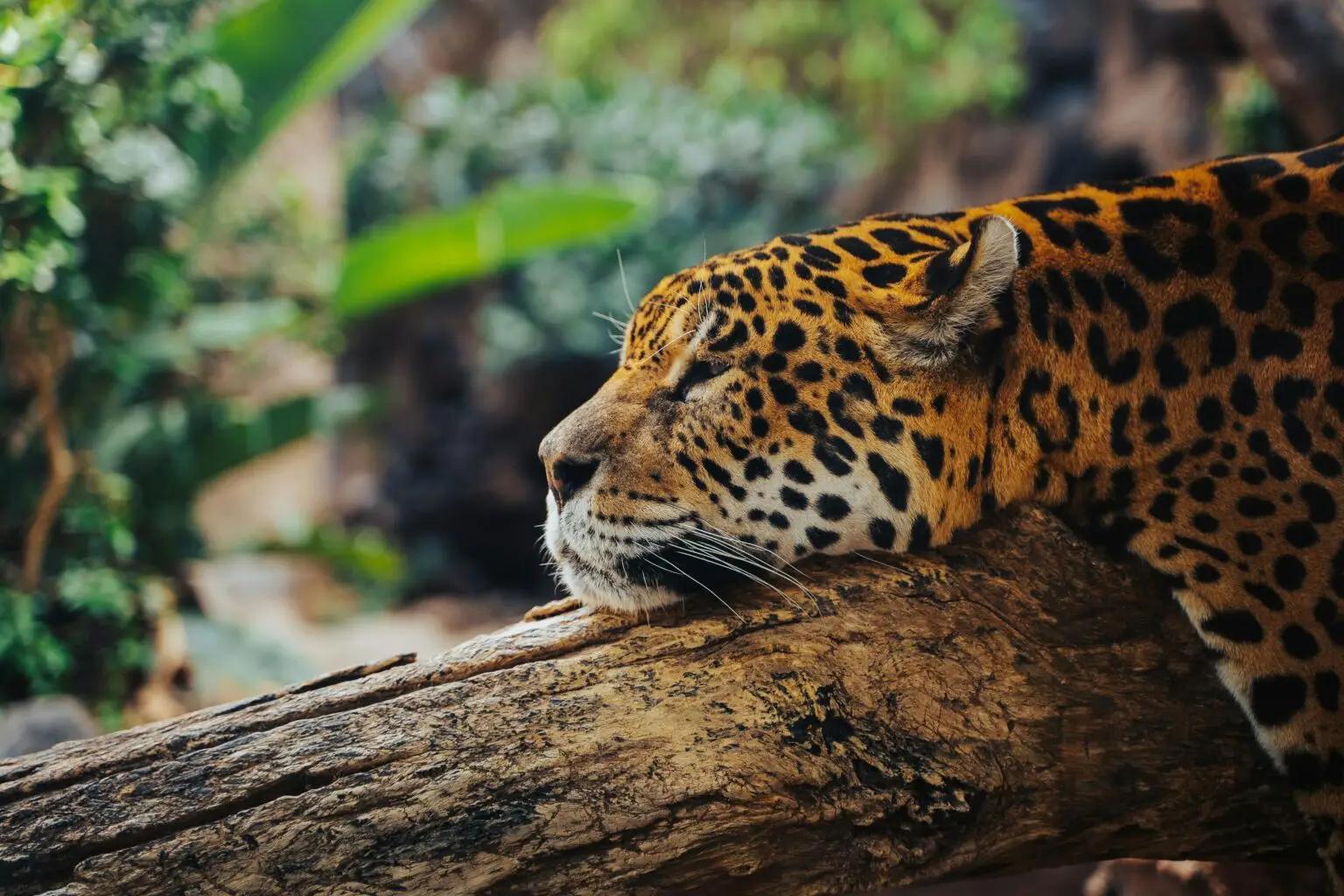
- More than 230 mammal species, from howler monkeys to sloths, Baird’s tapir and the jaguar, symbols of a wildlife still present in the country.
- More than 220 reptile species, from green iguanas to basilisks and the crocodiles of the Tárcoles River, not forgetting snakes with striking colors.
- 180 amphibian species, including the well-known poison dart frogs in blue, red or orange, small jewels of the rainforest.
- About 1,250 butterfly species and several thousand moth species, among more than 300,000 insect species.
- 1,600 species of fish, both marine and freshwater, complete the picture.
This heritage cannot be taken for granted. It is fragile and vulnerable, and its preservation depends largely on the choices people make every day — starting with the travelers who visit it. Watching a monkey in its natural habitat, meeting the gaze of a toucan in the canopy or hearing a frog sing in the forest at night: these are privileges, not rights. Privileges that call for respect, discretion and commitment.
Ecotourism, one of the country’s pillars
Today, tourism is one of the pillars of the Costa Rican economy and one of its main sources of foreign currency. More than two and a half million visitors cross the country’s borders each year, drawn by nature that is both accessible and protected. Costa Rica was one of the world’s pioneers of ecotourism in the 1980s, long before the term became a marketing argument. Its conservation policy, its accessible national parks, its lodges built in harmony with the environment and its naturalist guides trained to share living knowledge have built a worldwide reputation.
The main regions in brief
To find your bearings before choosing an itinerary, here are the main regions our tours pass through.
The Central Valley. Around San José and Heredia, where our agency is based, the Poás and Irazú volcanoes overlook hills covered in coffee plants. Coffee can be discovered in Turrialba, from the second day of the Scarlet Macaw Tour.
Arenal and the northern plains. Arenal Volcano, its hot springs and hanging bridges, the turquoise Río Celeste at the foot of Tenorio, then the rainforests of Sarapiquí: this is the heart of the nine-day Rainbow Toucan Tour.
Monteverde. A cool, misty high-altitude cloud forest, to explore on foot or above the canopy. It features in the self-drive Gecko Tour and in the Green Iguana Tour with a private driver-guide.
The Caribbean coast. In the north, the canals of Tortuguero, reachable only by boat or small plane; in the south, Cahuita, Puerto Viejo and Manzanillo, Afro-Caribbean culture and the Bribri communities. See the Blue Morpho Tour for Tortuguero and the Great Green Macaw Tour for the southern Caribbean.
Guanacaste and the Gulf of Nicoya. Dry forest, calm beaches such as Sámara, the islands of the gulf and the most pronounced dry season in the country. The Capuchin Monkey Tour spends several days there.
The central and southern Pacific. Manuel Antonio, then the Osa Peninsula, with Bahía Drake, Corcovado National Park and Caño Island, and the mountains of San Gerardo de Dota, home of the quetzal. Discover them with the self-drive Leatherback Turtle Tour or the Sloth Tour with a private driver-guide.
Why choose Costa Rica for your next trip?
Because this country often leaves a lasting mark. Not in a spectacular way, but in small touches: a sunrise over Lake Arenal, the silence of a cloud forest in Monteverde, the simple warmth of a Costa Rican wishing you “Pura Vida” with a sincere smile. Whether you love wildlife, high-altitude hiking or quiet beaches, are curious about Indigenous cultures or simply looking for a deep and genuine change of scene, Costa Rica has something for you.
And it often surprises those who arrive having already read a great deal.
Traveling with Vacances au Costa Rica means relying on a local team that knows the country in depth and cares about showing it to you with care and respect. To prepare your stay, see also our advice and our travel tips, then let’s talk about your plans through our quote request.
Pura Vida.