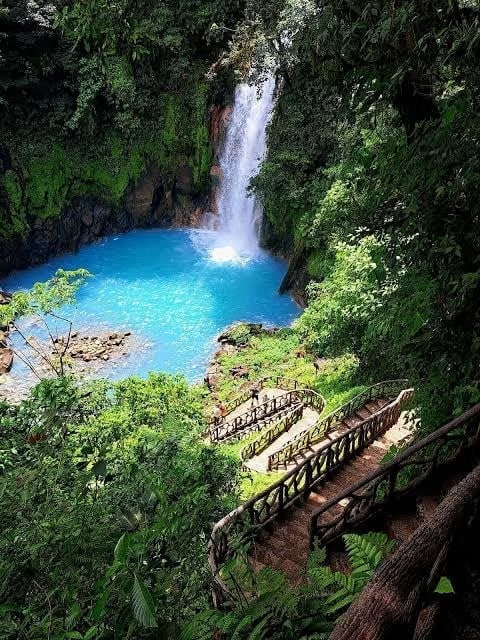
Six in the morning in Monteverde: a low cloud slips between the trees, revealing and then hiding the great moss-covered trunks. At the same moment, on the beach at Tamarindo, the sun is already warming the sand. Two climates constantly coexist in this small country, which makes the question of the “right time” more interesting than it seems.
There is no bad season in Costa Rica, but there is a good season for each project. Here is how we help our travelers choose it.
The country has a dry season and a rainy season. Costa Ricans call them verano (summer) and invierno (winter), a vocabulary that surprises, since it does not match the seasons of the Northern Hemisphere.
Key point: the rainy season mostly means afternoon showers, not weeks of continuous rain. Mornings are often clear, the vegetation is an intense green and lodging prices drop.
This is the high season: clear skies over the Pacific, dry tracks, very busy national parks. The beaches of Guanacaste, snorkeling at Caño Island and forest hikes are then at their best. It is also the most expensive period, and popular lodging is booked several months ahead.
It sets in in May, with showers mostly in the late afternoon. Waterfalls and rivers swell, forests are very active and visitor numbers drop markedly. September and October are the wettest months on the Pacific, especially on the Osa Peninsula.
Between late June and early August, the rains often pause on the Pacific side: this is the veranillo de San Juan, the “little summer”. Nature still very green, moderate prices, fewer people: a period we gladly recommend.
| Month | Season | Pacific | Caribbean | Prices |
|---|---|---|---|---|
| January | Dry | Very favorable | Variable | High |
| February | Dry | Very favorable | Variable | High |
| March | Dry | Very favorable | Fairly favorable | High |
| April | End of dry season | Favorable | Favorable | Medium |
| May | Start of the rains | Afternoon showers | Favorable | Low |
| June | Rains | Afternoon showers | Favorable | Low |
| July | Veranillo | Favorable | Wetter | Medium |
| August | Rains | Fairly favorable | Fairly favorable | Medium |
| September | Rains | Very rainy | Very favorable | Lowest |
| October | Rains | Very rainy | Very favorable | Lowest |
| November | Transition | Increasingly dry | Wetter | Low |
| December | Dry | Favorable | Wet | High |
The heart of the high season. On the Pacific, days are sunny and coastal roads passable. It is a good period for families who want to combine beaches, forests and outdoor activities. Rates are at their peak: book your lodging three to four months ahead.
One of our favorite months: the Pacific stays sunny, the first rains cool the air and prices begin to drop. The only exception is Holy Week, very busy: book early if you travel then.
The green season begins. Waterfalls swell, frogs can be heard at nightfall and rivers offer good rafting conditions. Mornings generally stay dry: this is the time for hiking and birdwatching.
Tip: in the rainy season, plan outdoor activities in the morning, and keep the afternoon for hot springs, a farm visit or rest.
The veranillo brings a lull on the Pacific. It is also the season of humpback whales from the Southern Hemisphere in Ballena Marine Park and Drake Bay, and the start of green turtle nesting in Tortuguero.
The rainiest months on the Pacific, but often the driest on the Caribbean coast: Puerto Viejo, Cahuita and Tortuguero then enjoy pleasant weather. Green turtle nesting continues in Tortuguero, and prices are at their lowest.
A transition month: the Pacific gradually dries out, the Caribbean coast enters its wet period. A good option for flexible travelers who want to avoid crowds.
From mid-December, the sky clears over the Pacific. The year-end holidays are in very high demand: book early.
The driest region in the country, with a long and reliable dry season from December to April. In March and April, the heat can be intense.
Can be visited all year. Monkeys, sloths and birds are seen in every season, with drier weather from December to April.
One of the rainiest regions in the country. For hiking in Corcovado, prefer the dry season, from December to April.
The volcano creates its own microclimate and often hides in the clouds, whatever the season: plan at least two nights to increase your chances of seeing it clear. The hot springs can be enjoyed all year.
Year-round destinations. The resplendent quetzal is easier to see during its nesting period, roughly from February to May.
The calendar here is offset from the Pacific: September and October are often the most pleasant months, December and January among the wettest.
For temperatures and rainfall region by region, see also our page Costa Rica’s climate.
| Your project | Recommended period | Other option |
|---|---|---|
| Family | January to March | July |
| Honeymoon | February to April | July and August |
| Nature and wildlife | All year | May to July, fewer people |
| Hiking | December to April | — |
| Surfing | May to November (Pacific) | December to March (Caribbean) |
| Small budget | September and October (Caribbean) | May and June |
| Green turtles | July to October (Tortuguero) | — |
| Leatherback turtles | October to March (Playa Grande) | — |
| Humpback whales | July to October | December to March |
| Quetzal | February to May | — |
Our advice: if your dates are flexible, April and July often offer the best balance between weather, nature and prices.
The country lies outside the usual hurricane tracks. Tropical depressions can, however, increase rainfall, especially in September and October.
The main roads, yes. Some dirt tracks become difficult after heavy rain; an SUV is enough for most itineraries. By motorcycle, you can ride all year, allowing for afternoon showers in the green season: see our motorcycle trips.
On the coasts and in the plains, it is hot all year (about 25 to 33 °C). In the Central Valley, around San José, temperatures are milder. At altitude, in Monteverde or San Gerardo de Dota, nights are cool: bring a jacket.
Hesitating between two periods? Tell us your possible dates: we will suggest the itinerary that makes the most of them, through our quote form.

Learn more
Let’s talk about your trip
Your dates, your wishes, the pace that suits you: a travel consultant based in Costa Rica will suggest a tailor-made itinerary within 48 business hours.


