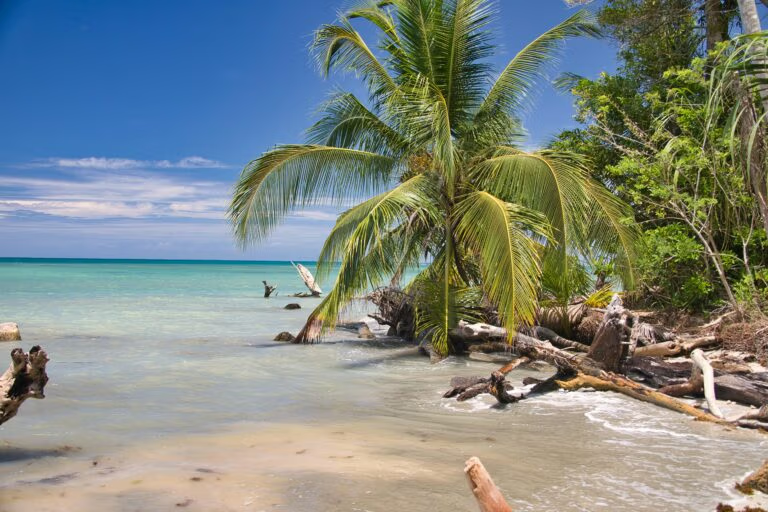
A wave breaks into foam on the sand, a pelican dives a few meters from the shore and, behind the beach, the forest comes down to the sea. Howler monkeys can be heard without being seen. This scene repeats itself on both coasts of Costa Rica, each with its own character.
The country has about 1,300 kilometers of coastline between the Pacific Ocean and the Caribbean Sea. This guide helps you choose according to your wishes: swimming, surfing, snorkeling, wildlife watching or simply resting.
Before you go: some beaches are dangerous for swimming because of currents. Swim in supervised areas or those indicated as safe, and ask your lodging about the day’s conditions.
This is the driest region in the country, with a long and reliable dry season from December to April. The waters are often calm and warm, making it a good base for families and water sports enthusiasts.
Its sand is made of shell fragments, hence its name and its pale color. The turquoise water is ideal for swimming and snorkeling. It is reached on foot from Brasilito, in about twenty minutes along the beach.
Protected by Las Baulas National Marine Park, Playa Grande is one of the leatherback turtle’s nesting beaches. From October to March, night watching is done only with a certified guide. By day, the beach is good for walking and experienced surfing; currents make swimming tricky.
Tamarindo is the liveliest resort in the region: restaurants, surf schools and nightlife. Its waves suit beginners, and it is a good starting point for the estuary, the mangroves and the neighboring beaches.
The opposite of Tamarindo, Nosara cultivates calm: few buildings, lodging scattered in the vegetation, a strong presence of yoga and surfing. Playa Guiones stretches for several kilometers, with regular waves.
Light sand, calm water and a marina: Flamingo suits families with young children. It is also the departure point for catamaran trips and dives to the Catalina Islands, where you meet rays, turtles and schools of fish.
Further south, the beaches are surrounded by very rich rainforest. Manuel Antonio is the best-known example: the forest comes down to the sand.
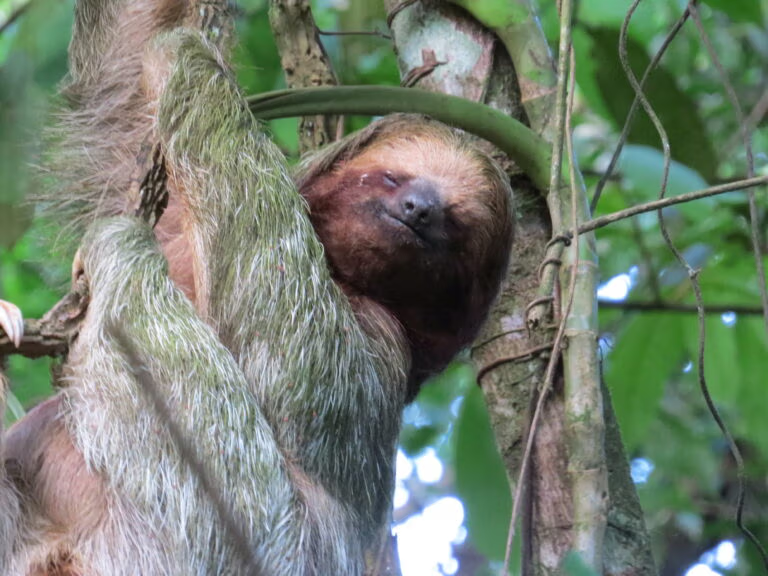
The national park’s main beach forms an arc sheltered by a rocky headland, with calm, warm water. Capuchin monkeys, squirrel monkeys and sloths live in the forest that borders it. Entry is paid, the number of visitors is limited and booking is done online in advance; the park is closed on Tuesdays.
A small cove reached by a short trail from the Manuel Antonio neighborhood, Biesanz offers calm, shallow water, good for snorkeling when the sea is clear.
About 1 h 30 from San José, Jacó is very busy on weekends with Costa Ricans. The waves are powerful: it is a surf beach more than a swimming beach.
Harder to reach (by road or by the ferry from Puntarenas to Paquera), the Nicoya Peninsula attracts travelers looking for less developed beaches.
A surfers’ village at the tip of the peninsula, Santa Teresa combines regular waves, restaurants, yoga studios and sunsets over the Pacific. The atmosphere is relaxed, and the access road remains partly unpaved.
A former fishing village turned bohemian refuge, Montezuma has an often rough sea. Its main attraction is the nearby waterfall, about twenty minutes’ walk through the forest, where you can swim in a natural pool.
Sheltered by a reef, the bay of Sámara offers gentle waves: it is one of the best beaches for families and beginner surfers.
The beaches here are less crowded and wilder. Infrastructure is simpler, nature very present.
A surfers’ village facing a powerful swell, Dominical suits intermediate and experienced surfers rather than swimmers. Nearby, the Nauyaca waterfalls drop in two tiers into pools where you can swim.
At low tide, a sandbar draws a whale’s tail: it is the symbol of Ballena National Marine Park. Snorkeling, sea kayaking and, from July to October and then from December to March, humpback whale watching are on offer.
A biological reserve off the Osa Peninsula, Caño Island is one of the best snorkeling and diving sites in the country: turtles, rays, reef sharks and schools of fish. It is reached by boat from Drake Bay.
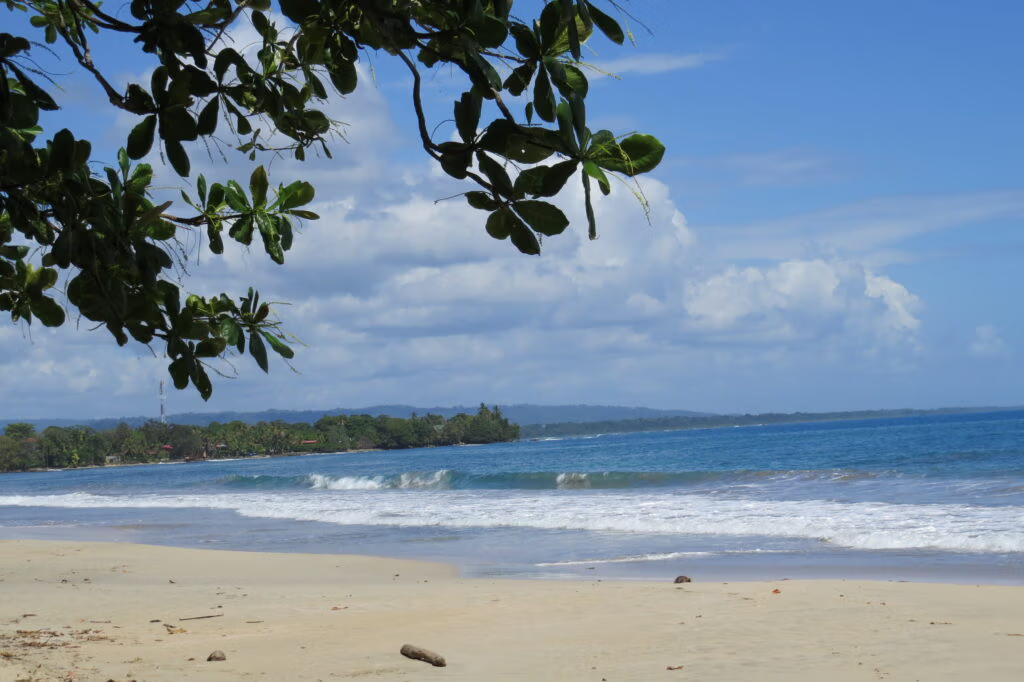
Golden or dark sand lined with coconut palms, Afro-Caribbean culture, coconut-milk cooking: the Caribbean coast has a personality different from the Pacific, and a slower pace.
Puerto Viejo is the lively heart of the coast. The neighboring beaches of Cocles, Playa Chiquita and Manzanillo are calmer. September and October are often the driest months here, when the Pacific receives its heaviest rains.
A trail follows the sea in the shade of the forest: capuchin monkeys, sloths and raccoons often appear, before a swim in calm water. The park protects the main coral reef of the Caribbean coast. At the Cahuita entrance, access is by voluntary contribution.
Tortuguero’s beaches are not swimming beaches: the sea is rough. They do, however, host green turtle nesting, from July to October, to be watched at night with a guide.
| Beach | For | Best period | Suitable for |
|---|---|---|---|
| Playa Conchal | Swimming, snorkeling | December to April | Everyone |
| Playa Grande | Leatherback turtles, surfing | October to March | Experienced surfers |
| Tamarindo | Beginner surfing, nightlife | December to April | Beginners |
| Sámara | Swimming, families | December to April | Everyone |
| Manuel Antonio | Wildlife, swimming | All year | Everyone |
| Santa Teresa | Surfing, sunsets | All year | Intermediate |
| Uvita | Whales, snorkeling | July to October, December to March | Everyone |
| Caño Island | Snorkeling, diving | December to April | Everyone |
| Cahuita | Wildlife, snorkeling | September and October | Everyone |
| Tortuguero | Green turtles | July to October | Everyone |
Rip currents are the main danger. If you are pulled out to sea, do not swim against the current: swim parallel to the beach to get out of it, then return to shore at an angle.
Do not swim at river mouths: crocodiles frequent these areas in much of the country.
The sun is strong all year. Choose a reef-safe sunscreen, wear a hat and a UV shirt for snorkeling.
Good to know: in Costa Rica, beaches are public. The 50-meter strip from the high-tide line belongs to the State: no hotel can prohibit access to it.
We compose your itinerary according to the season and your beach wishes: your tailor-made trip.
From December to April, the Pacific is at its driest. In September and October, the Caribbean coast is often sunnier. The guide When to go to Costa Rica details each month.
Sámara, Flamingo and the main beach of Manuel Antonio, in calm seas, are among the most suitable.
Yes, with a guide: green turtles in Tortuguero from July to October, the leatherback at Playa Grande from October to March.
Learn more
Let’s talk about your trip
Your dates, your wishes, the pace that suits you: a travel consultant based in Costa Rica will suggest a tailor-made itinerary within 48 business hours.