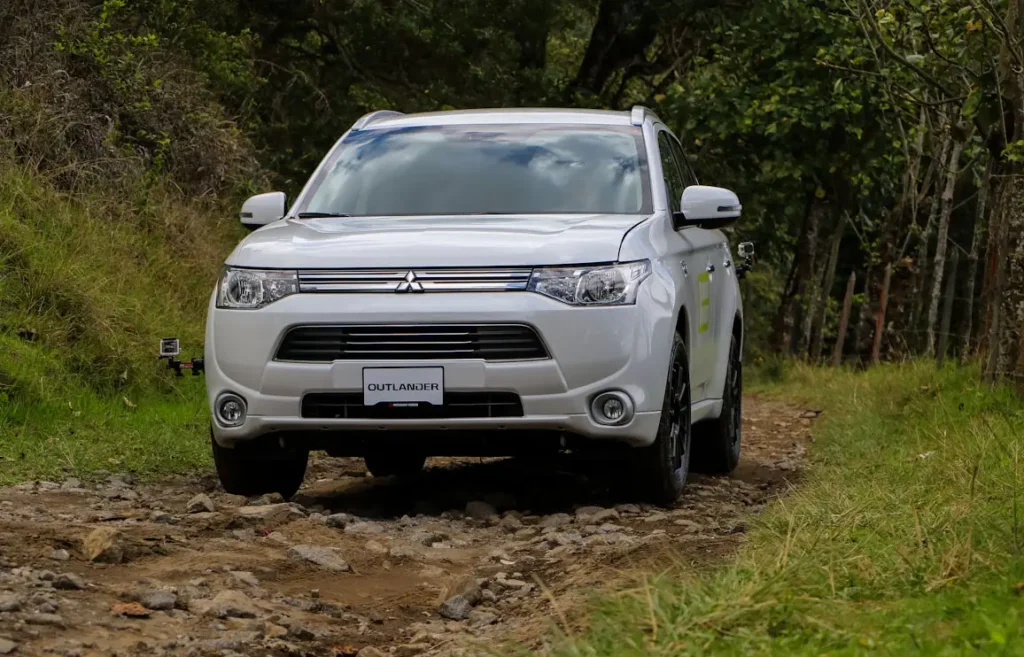
Taking the road in Costa Rica means being able to stop by a river where crocodiles doze, wait for the mist to lift over Arenal or reach a Pacific beach before the midday heat. A rental car gives you that freedom, as long as you know a few rules specific to the country: insurance, road conditions, night driving.
Here is what we have been explaining to our travelers before each self-drive tour since 2014.
It all depends on your itinerary and how you like to travel. A car makes sense if you want to string together several regions, stop wherever you like and reach places that shuttles do not serve.
If you prefer not to drive, two other formulas exist: shared hotel-to-hotel shuttles, which link the main stops, and a trip with a French-speaking driver-guide.
An SUV is enough for most itineraries, including Monteverde, the Osa Peninsula and the Nicoya Peninsula. A 4×4 adds comfort on some dirt tracks, in the rainy season, or if you plan secondary roads with river crossings. On the other hand, there is no need to pay for a 4×4 on a tour that stays on the main paved roads.
Good to know: some stops are done without a car. Tortuguero is reached by bus and then boat, Drake Bay by boat from Sierpe. The car then waits for you in a parking lot.
In Costa Rica, third-party liability insurance (often called TPL or SLI depending on the company) is mandatory and included in the rental. It covers damage caused to others, but not to your own vehicle. Rental companies then offer additional coverage (CDW, theft protection), which can significantly increase the price shown on comparison sites.
Potholes, stony tracks, a windshield hit by gravel: minor damage is common, and a deductible can reach several hundred or even several thousand dollars. We therefore recommend the deductible waiver. Some premium credit cards cover car rentals: check with your bank that the coverage really applies in Costa Rica, as the conditions are often restrictive.
Walk around the car with an employee, in daylight, and photograph or film the outside, the inside and the wheel rims. Have every existing scratch noted on the contract and keep a copy. These few minutes avoid most disputes on return.
The major international brands are present at San José airport, alongside established Costa Rican companies. Prices vary greatly depending on the insurance included: always compare the final price, insurance included.
We work with two Costa Rican rental companies we know on the ground, Adobe Rent a Car and Mapache Rent a Car. Through them, we offer an SUV or a 4×4 delivered at the airport or your hotel, an additional driver free of charge and Wi-Fi included: see our car rental in Costa Rica.
Your national license (French, Belgian, Swiss or Canadian) and your passport are enough for a tourist stay of up to 90 days. You must be 21 to drive, and 25 to take out full coverage insurance. Always keep the original license, passport and rental contract in the car.
Driving is on the right, seat belts are mandatory for all passengers and using a phone while driving is prohibited. Speed limits are low (often 60 to 80 km/h outside towns) and checks are frequent. For alcohol, the simplest rule is the right one: do not drink if you drive. A few roads, notably Route 27 between San José and the Pacific coast, have tolls: keep some change.
The main roads are paved, but potholes, barely visible speed bumps and winding mountain roads require attention. Navigation apps sometimes suggest shortcuts on difficult tracks: prefer the main roads, even if a little longer. Depending on the stops, allow 30 minutes to 4 h 30 of driving per day.
Night falls around 6 p.m. all year. Off the main roads, roads are poorly lit and you meet pedestrians, cyclists and animals. We build our itineraries so that you reach each stop before dark.
On some tracks in Nicoya or the south of the country, you may have to cross a river. Never drive in without knowing the depth: watch another vehicle cross or ask locally. After heavy rain, a crossing that was easy in the morning can become dangerous in the afternoon.
Leave nothing visible in the car, even for a few minutes, especially in beach and nature site parking lots. Use guarded parking when available: the cost is modest. In some places, a guard (cuidacarros) offers to watch the vehicle for a small coin: this is common practice.
No. Your national license and passport are enough for a stay of up to 90 days.
Yes. The road to Monteverde is largely paved; an SUV is perfectly suitable in every season.
Yes. We offer car rental only, to which you can add your lodging and tours.
On a self-drive tour, we also book your hotels and activities, and you receive a travel book with the itinerary and the Waze coordinates of each stop. The same principle exists by motorcycle: see self-guided motorcycle rental and our Costa Rica motorcycle trips.

Learn more
Let’s talk about your trip
Your dates, your wishes, the pace that suits you: a travel consultant based in Costa Rica will suggest a tailor-made itinerary within 48 business hours.