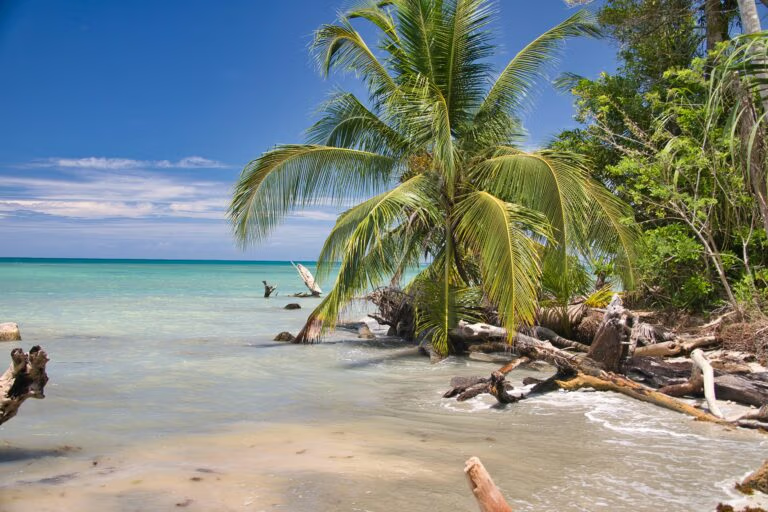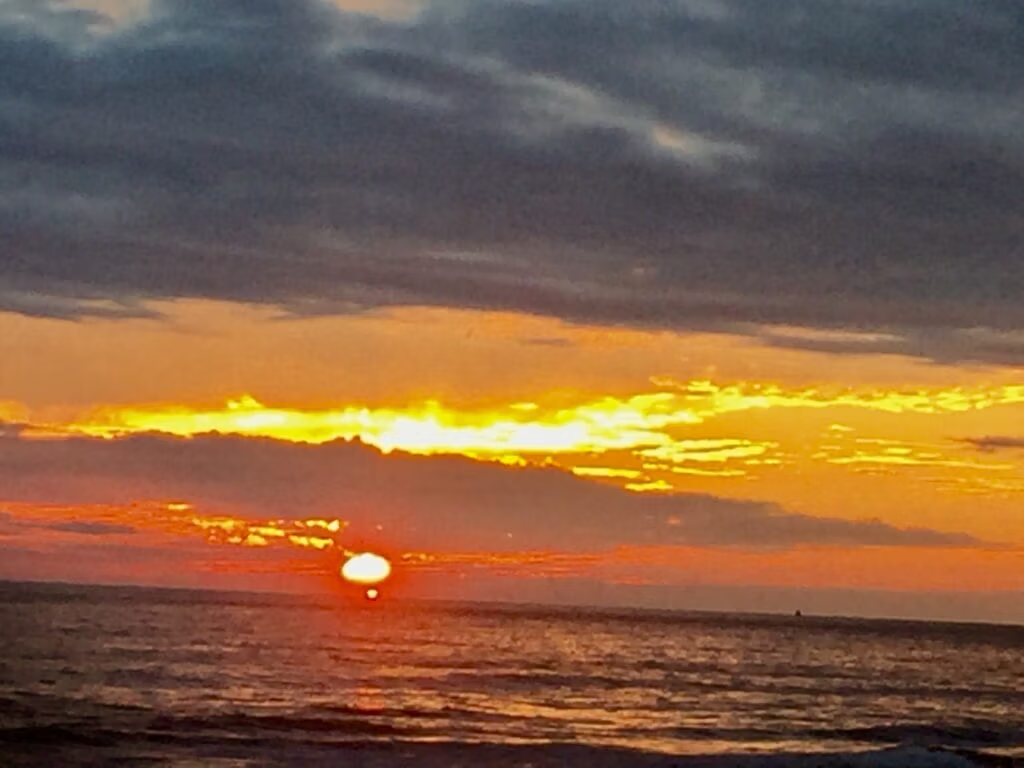
At the end of the day, surfers wait for one last wave while the sun sets over the Pacific and the beach fills with strollers. Tamarindo, on the northern coast of Guanacaste, is Costa Rica’s liveliest beach resort: a practical base for surfing, sea outings and discovering the quieter neighboring beaches.
About 1 h 15 from Liberia International Airport, Tamarindo is easy to reach at the start or end of a trip. Guanacaste is the driest region in the country, with a long and reliable dry season from December to April. The beach, several kilometers long, has regular waves that suit beginner surfers well. Restaurants, surf schools and activities are all within walking distance.
From December to April, the sky is clear and it is hot (often over 30 °C); January, February and Holy Week are in high demand. From May to November, showers fall mainly in the afternoon, the vegetation turns green again and prices drop; September and October are the rainiest months. See our guide When to go.
The north of the beach, facing the village, is lively and ideal for surf lessons; the south is calmer. Do not swim near the mouth of the Tamarindo River, frequented by crocodiles.
South of Tamarindo, on foot along the beach, Langosta is quieter and popular for its sunsets.
On the other side of the estuary, Playa Grande is part of Las Baulas National Marine Park, one of the main nesting sites of the leatherback turtle. From October to March, night watching is done only with a certified guide. By day, it is a surf beach with more powerful waves.
Avellanas and Playa Negra, to the south, attract experienced surfers; Conchal and Flamingo, to the north, offer calmer waters for swimming. See our guide to Costa Rica’s beaches.
Many schools welcome beginners, children included. Experienced surfers find more demanding waves on the neighboring beaches. See our surf guide.
At sunset, catamarans sail along the coast with a snorkeling stop; dolphins and turtles are often seen.
The Catalina Islands, offshore, are one of the renowned dive sites of the North Pacific: rays, turtles, schools of fish. Trips leave from Tamarindo, Flamingo or Playas del Coco.
The mangroves of the Tamarindo River estuary can be explored by kayak or boat, with a guide: herons, egrets, crabs, sometimes crocodiles watched from a safe distance.
Rincón de la Vieja National Park, with its fumaroles, waterfalls and hot springs, is about 2 hours’ drive away, as is Santa Rosa National Park.
From the family soda to the restaurant facing the sea, the choice is wide: fresh fish, ceviche, international cuisine. Prices are higher than elsewhere in the country.
Boutique hotels between Tamarindo and Langosta, apartments with kitchens for families, lodges on the heights with a view of the bay. For more calm, we also offer lodging on the neighboring beaches.
By road, about 1 h 15 from Liberia airport and 4 h 30 from San José. Shared shuttles link Tamarindo to the other stops, and small planes serve the Tamarindo airstrip from San José. To explore the neighboring beaches, a car is the most flexible solution; an SUV is enough. See our car rental offer. The tracks of the neighboring Nicoya Peninsula can also be ridden by motorcycle: see our Costa Rica motorcycle trips.
Three or four nights let you alternate beach, surfing and one or two excursions. Tamarindo combines well with Arenal and Monteverde, or with the Nicoya Peninsula.
Yes, for surf lessons, boat trips and easy access. For calmer swimming, Flamingo and Conchal are close by.
From October to March, at Playa Grande, on night outings with a certified guide. Nothing is guaranteed.
Tamarindo for liveliness and convenience, the Nicoya Peninsula (Sámara, Nosara, Santa Teresa) for quieter villages.

Learn more
Let’s talk about your trip
Your dates, your wishes, the pace that suits you: a travel consultant based in Costa Rica will suggest a tailor-made itinerary within 48 business hours.