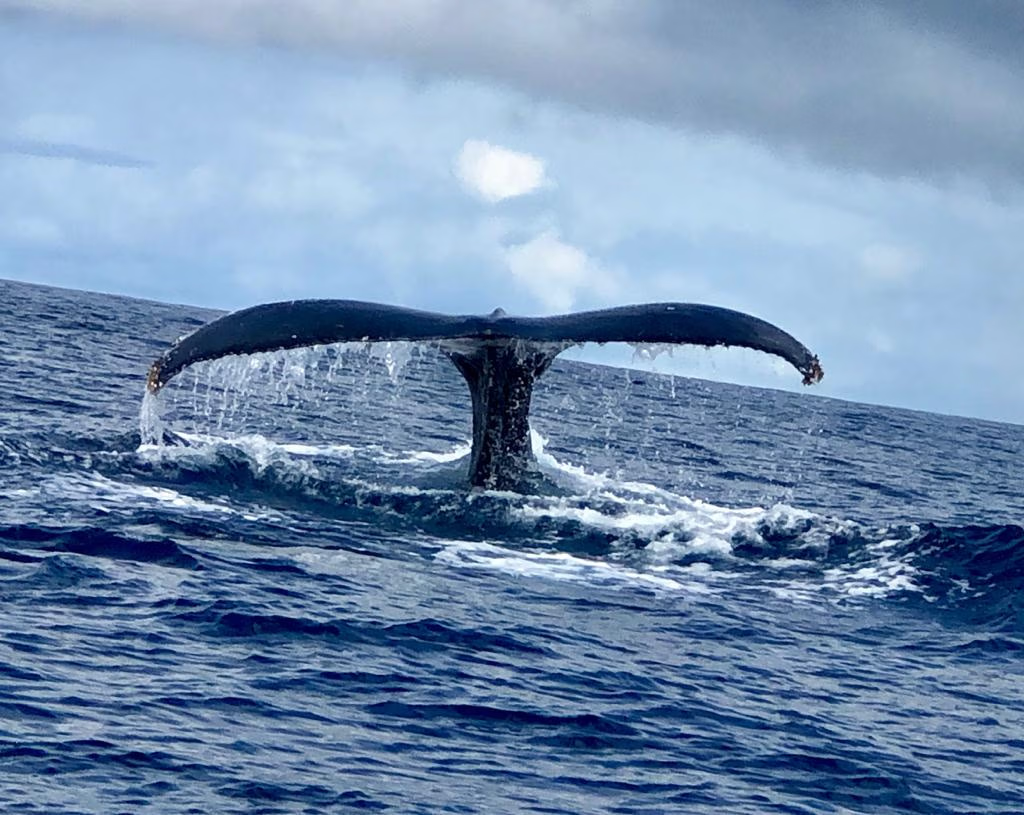
A blow in the distance, then a tail rising and disappearing into the blue of the Pacific: seeing a humpback whale from a boat is one of the moments our travelers most like to recount. Costa Rica has the particularity of hosting two populations of humpback whales, at two times of year, and dolphins in every season.
Coming from the cold waters of the South Pacific, they reach the warm waters of Costa Rica to mate and give birth. This is the richest season: mothers and calves, breaches, fin slaps. Ballena National Marine Park, in Uvita, and the waters around the Osa Peninsula and the Golfo Dulce are the best areas. August and September are often the most active months.
Whales from the North Pacific also visit the Costa Rican coasts, in smaller numbers. Drake Bay, the Golfo Dulce and the South Pacific remain the preferred areas.
The park takes its name from the whales and from the sandbar that, at low tide, draws a whale’s tail. Boat trips leave from the beaches of Uvita and often combine whale watching with snorkeling. A whale and dolphin festival is held there every year, in September.
The lodges of Drake organize sea outings with naturalist guides. Whales, snorkeling at Caño Island and a day in Corcovado are easily combined. See our Osa Peninsula guide.
Catamaran trips from Quepos let you see dolphins and, in season, humpback whales, with a snorkeling stop. A practical option for families.
In the north, sea outings from Tamarindo, Flamingo or Playas del Coco are mostly a chance to see dolphins, turtles and rays; whales may pass from December to March.
Pantropical spotted dolphins, bottlenose dolphins and spinner dolphins frequent Costa Rican waters in every season. They often accompany boats, playing in the bow wave.
Costa Rica regulates cetacean watching: a minimum distance, reduced speed, a ban on cutting across the animals’ path or encircling them, limited watching time. Choose operators that respect these rules; we work with providers that apply them.
To make the most of whale season, plan at least two or three nights in Uvita or Drake. Our tours passing through the region are presented below.
In peak season, the chances are good, without being guaranteed: they are wild animals.
From August to October for Southern Hemisphere whales; from December to March for Northern Hemisphere whales, in smaller numbers.
Yes, with suitable life jackets; catamaran trips are the most comfortable for families.
It is possible from some viewpoints in Uvita or Drake, but a boat trip remains the best option.

Learn more
Let’s talk about your trip
Your dates, your wishes, the pace that suits you: a travel consultant based in Costa Rica will suggest a tailor-made itinerary within 48 business hours.