In the morning, mist drifts between trees covered in moss and orchids, then suddenly lifts to reveal the valley all the way to the Gulf of Nicoya. Set on the Tilarán mountain range, at roughly 1,200 to 1,800 meters (4,000 to 5,900 feet), Monteverde is Costa Rica’s best-known cloud forest, and a stop we gladly include in our tours.
“Monteverde” refers to two neighboring communities. Monteverde was founded in the early 1950s by Quaker families from the United States, who developed dairy farming there and later helped protect the forest. Santa Elena, a few kilometers away, is home to most of the restaurants, shops and tour agencies.
It is cool all year round: days around 16 to 24 °C (61 to 75 °F) and chilly nights. Mist and wind are part of the landscape, even in the dry season (December to April). From May to November, afternoon showers are more frequent. Bring a jacket and rain gear, whatever the season.
Created in the early 1970s with the support of the Quaker community and scientists, it is the oldest and best-known reserve in the area. Its well-marked trails range from easy walks to longer hikes. Visitor numbers are limited: it is best to book, and to set off early with a naturalist guide.
Slightly higher and often quieter, it offers a comparable cloud forest. It is run for the benefit of the Santa Elena high school: your entrance fee supports local education.
Several private reserves, such as Curi-Cancha or the Children’s Eternal Rainforest (Bosque Eterno de los Niños), offer quieter trails, popular with birdwatchers.
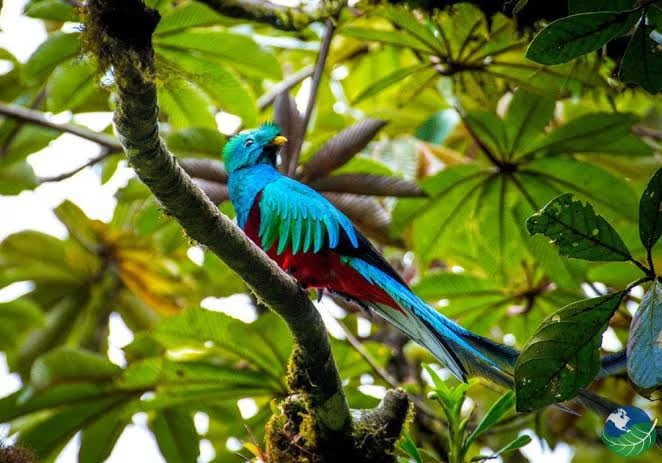
Iridescent green plumage, a red breast and, in the male, long tail feathers: the quetzal was sacred to the Maya and Aztec peoples. It is easiest to see during its nesting season, from about February to May. A local guide who knows the fruit trees where it feeds greatly improves your chances.
Several parks link forest trails to hanging bridges at canopy level. You walk at your own pace, looking for birds, bromeliads and giant trees. An activity well suited to families.
Monteverde has several zipline courses, some very long, above the forest and the valleys. Minimum age and conditions vary by operator.
After sunset, a two-hour outing with a guide and a flashlight reveals another world: frogs, insects, snakes, sometimes a kinkajou or a sloth. It is often one of the most memorable moments of the stay.
The cheese factory founded by the Quaker families, small coffee farms and chocolate workshops tell the area’s farming story. A coffee farm visit rounds off a morning in the forest nicely.
The access roads are now paved for most of the way; an SUV is enough in any season. Allow about 3 hours 30 minutes from San José and 3 to 3.5 hours from La Fortuna by road. From La Fortuna, there is also a crossing combining a vehicle, a boat on Lake Arenal and another vehicle. Shared shuttles link Monteverde to the main stops: it is one of the options in our trips without a car.
Family-run lodges at the edge of the forest, boutique hotels with valley views, small guesthouses: the choice is wide. We favor places close to the reserves, with gardens visited by hummingbirds and agoutis. Cool nights often end with a hot chocolate.
Two nights let you visit a reserve with a guide, walk the hanging bridges or try the zipline, and go on a night walk. Three nights leave time to add Santa Elena or a coffee farm. Monteverde combines naturally with Arenal, the Pacific beaches and Manuel Antonio, as in our tours below.
Cool rather than cold: days are mild, evenings chilly. A fleece or a light jacket is enough.
No. An SUV is perfectly suitable. See our car rental page.
They complement each other: Monteverde for the best-known reserve, Santa Elena for a quieter forest. With two or three nights, you can visit both.
No, but with a guide and during the nesting season (February to May), your chances are good. San Gerardo de Dota, further south, is another area known for quetzal sightings.


Learn more
Let’s talk about your trip
Your dates, your wishes, the pace that suits you: a travel consultant based in Costa Rica will suggest a tailor-made itinerary within 48 business hours.