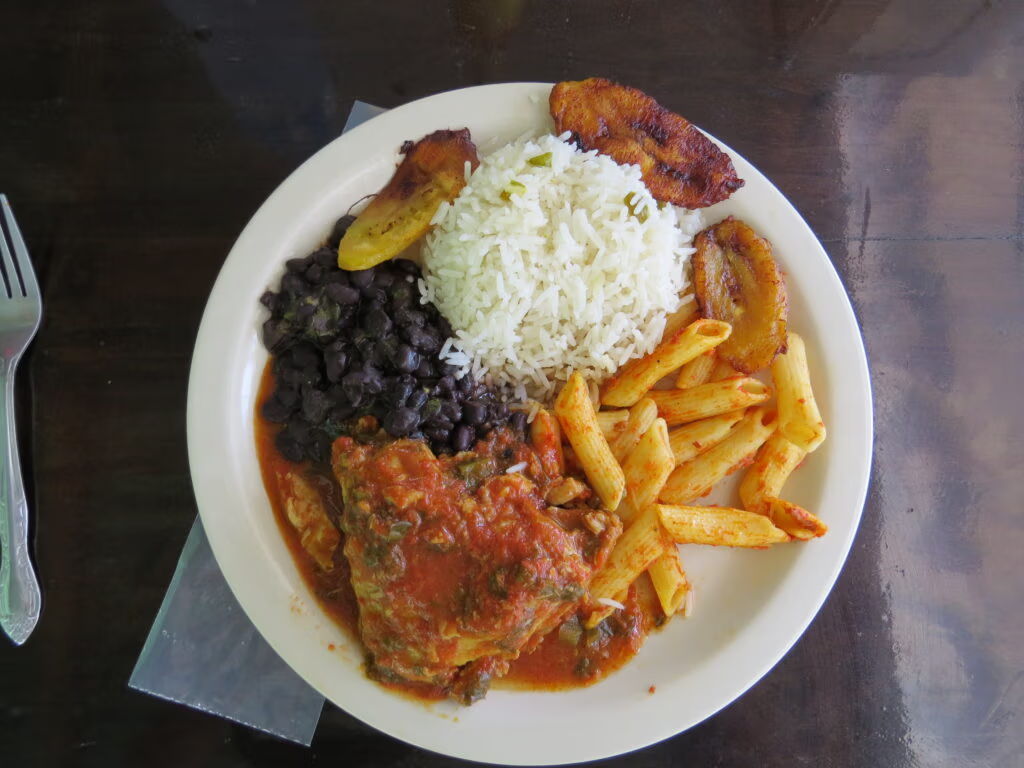
In the early morning, the smell of coffee filtered through a cloth sock, the chorreador; at noon, a steaming casado on the wooden table of a small village restaurant; in the evening, a fish grilled in coconut milk on the Caribbean coast. Costa Rican cuisine is simple, generous and attached to its produce: rice, beans, corn, tropical fruit, fish from two oceans. Here is what to taste during your trip, and where.
The breakfast dish: a mix of rice and black beans sautéed with onion, bell pepper and cilantro, seasoned with Lizano sauce, the slightly sweet brown sauce found on every table. It is served with eggs, fresh cheese, plantain and sometimes sour cream (natilla).
The quintessential midday meal: rice, beans, salad, ripe plantain, a vegetable side and meat or fish. Its name means “married”. It is the dish of the day in sodas, the small family restaurants, and a good way to eat like Costa Ricans, at a gentle price.
White fish, often corvina, marinated in lime juice with onion, bell pepper and cilantro. It is enjoyed as a starter, with crackers, in seaside restaurants. Ceviche de mariscos combines shrimp, octopus and squid.
The small portions served with a drink in bars: chifrijo (rice, beans, fried pork and tomato salsa), patacones (slices of green plantain fried, flattened and fried again), ceviche or skewers.
Markets and small village shops, the pulperías, overflow with fruit often discovered for the first time: maracuyá (passion fruit), guanábana (soursop), mamón chino (rambutan), pitahaya (dragon fruit), cas (a small tart guava), star fruit, and a wide variety of mangoes, pineapples, papayas and avocados.
Grown at altitude, on the volcanic slopes of the Central Valley, in Tarrazú, Naranjo or Monteverde, Costa Rican coffee is a renowned arabica. A plantation visit lets you follow the path from cherry to cup. To taste it the traditional way, ask for a coffee prepared in a chorreador.
Fresh fruit juices made with water or milk, served in every soda: blackberry, pineapple, tamarind, cas, papaya. Coconut water, agua de pipa, is drunk straight from the nut along coastal roads. Horchata, made with rice or corn and cinnamon, is another traditional drink.
The national spirit, distilled from sugar cane; the Cacique brand is the most common. It is drunk in cocktails, such as the lime guaro sour. Local beers go well with bocas.
Tres leches, a cake soaked in three milks; arroz con leche, rice pudding with cinnamon; cajetas, milk candies. Cacao, grown mainly on the Caribbean coast and in the north, can be discovered in workshops in La Fortuna, Monteverde, Cahuita or Puerto Viejo, from pod to bar.
A coffee plantation visit, a chocolate workshop, a cooking class, a meal with a family or at the market: we gladly include these moments in your itinerary. See also our guide Things to do in Costa Rica.
No. It is mild; chili is served on the side, and Caribbean cooking is a little more seasoned.
Yes, easily: rice, beans, vegetables, fruit and eggs are everywhere, and the casado comes in a vegetarian version.
In most towns and tourist regions, yes. See our health guide.

Learn more
Let’s talk about your trip
Your dates, your wishes, the pace that suits you: a travel consultant based in Costa Rica will suggest a tailor-made itinerary within 48 business hours.


